Greetings my excellent friends!
Have you ever wanted to learn about history in the flesh, and see it play out right in front of you?
Maybe you said yes, maybe you said no, but for the sake of the argument I'm going to assume you said yes; you probably think as cool as it would be, it's impossible.
Well I am here to tell you that it's not. Growing up I have always had an affinity for history. It's always been so fascinating to me and I have always wondered why more people don't have a love for learning about the past.
So, I took a poll to find out why, and the resounding answer was that it's boring. I'd like to believe that they didn't mean the stories are boring, but that the way the stories were being told were boring.
With that in mind I thought about the most exciting way I have learned about history, and almost immediately Bill & Ted's Excellent Adventure popped into my head.

They traveled to Ancient Greece to learn about our good friend So-crates, Napoleon Bonaparte and Billy the Kid in order to pass their high school history class.
If Bill and Ted can find joy in history while failing their history class all year I think everyone else can too.
I hope you'll join me on this totally tubular adventure through British Caribbean history.
What are you waiting for, grab your air guitars, and meet me at the Circle K phone booth where "strange things are afoot!" Oh and Ted, don't forget to wind your watch!
Welcome my excellent friends! We've landed on the docks on Barbados in the Caribbean! This is where our story begins!
In the 1620s England set up camp in St Christopher and Barbados in the Caribbean. These new English colonies quickly became planatation colonies (focused speicficially on sugar), and shortly after that got involved in the Transatlantic Slave Trade. England used slavery to grow their commodity plants and enrisch Britain and their allies while their slaves suffered in poverty and silence.

This is a map representation of the Transatlantic Slave Trade.
For more general information on the slave trade watch this Crash Course video by John Green.
Let's head back to the telephone booth! Get ready to jump ahead a couple hundred years later to the 1800s.
Hello my excellent friends! We just landed in England in the center of a Parliment meeting!
On August 1st, 1833 Parliment passed the Act of Abolition. This act promised compensation for the owners of enslaved people and the creation of a transitional system for the enslaved people called Apprenticeship.
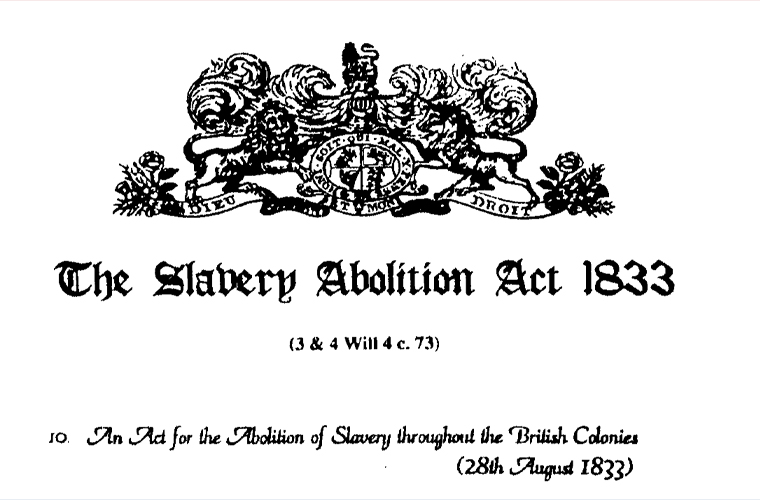
The transitional system known as Apprentinceship was a system that allowed slaves to be re-introduced to society and "earn their freedom." Apprenticeships were four-to-six years long. Slaves would work for their owners for about 40 hours a week still without pay. Once their apprenticeship was over they were considered fully transitioned into freedom and were no longer considered a slave; they were free.
Full emancipation finally came on August 1, 1838 when the Apprenticeship program was officially abolished. All former slaves gained freedom and could finally puruse their own livelihood.
Even though the slaves were freed, they were not equal. They were faced with discrimination, unequal wages, and struggled to be represented in politics. Overall though, the abolition of apprenticeships and slavery in Jamaica marked a significant milestone in the country's history, and helped led future generations to more freedom including their nation's.
Are you ready for another jump? It's time to head back the Caribbean, specifically Jamaica to meet our first guest to teach us more about the Morant Bay Rebellion!
Sup, amigos! We've just touched down in Spanish Town, Jamaica, home of Governor Edward John Eyre; our first special guest! He is a very prominent historical figure in Jamaican history. He was appointed Governor of Jamaica in 1864.
Governor Eyre is known as a controversial historical figure mainly because of the way he dealt with and handled the Morant Bay Rebellion.

This image is a sketch of Governor Edward John Eyre.
After Eyre came into power in the mid-19th century, when Jamaica was in a state of social and political unrest. Eyre reponded to the riots, and rebellion with extreme force. His brutal candidacy led to the death of hundreds of Jamaicans. His brutality included:
The decisions Eyre made during his candidacy were eventually investigated by the Royal Commission where he was found guilty of excessive force. Eyre's reputation was tarnished, and he was removed from office in Jamaica in 1866.
Now that we know a little bit of the background and all about Governor Eyre let's hop back into our phone booth, we have places to go and people to see!
What's kickin', Compadres? This is our second guest here to teach us about their crucial part in the Morant Bay Rebellion. This is Paul Bogle! Paul Bogle was born free in 1822, in St. Thomas Parish, Jamaica, and is known to this day as a National Hero of Jamaica.
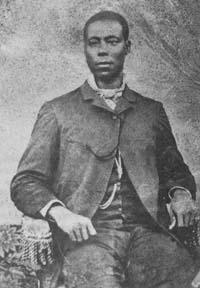
He dedicated his life to pursuing full freedom for his people. Bogle's historic impact on Jamaica begin in August of 1865 when he lit the fuse that we call the Morant Bay Rebellion because of the widespread pvoerty, inequality and the many injustices the black population faced during Eyre's candidacy.
To learn more about Paul Bogle let's click through his timeline here!
Alrighty now fellow time travelers! It's time for one last jump in our phone booth to meet our final guest to share his story on the Morant Bay Rebellion.
Our next special guest on a journey through history is George William Gordon.
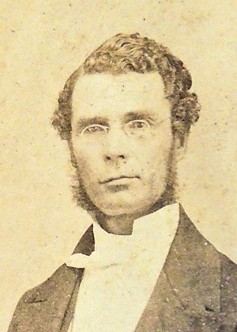
To learn more about Gordon click through the timeline below!
George Williwam Gordon was a Jamaican politician, busniessman and landowner, originially born to a mixed-race family in 1820. Because he was of African and European heritage he had a unqiue perspective on the social and political dynamics in Jamaica at the time.
Gordon quickly realized that he had the power to advocate for the rights of Jamaican people, so he decided to get involved in politics where he fought many social injustices for the people of St.Thomas in the Jamaican House of Assembly.
George William Gordon supported Paul Bogle and the efforts he was making to create change in their society both morally and financially.
In result of Gordon's position in Jamaican government he couldn't be directly involved in the uprising rebellion but because of his past support of Bogle's efforts he was accused of being involved. He was arrested by colonial authorities shortly after the March to Spanish Town. Despite the lack of evidence linking him to any violent riots and protests Gordon was tried and convicted of conspiracy to rebel. He was then hung on October 23, 1865.
Before Gordon was executed he wrote a letter to his wife and children, sharing his goodbyes with them and ensuring that they know he will be on the right side of history. Little did Gordon know that this letter would lead to Governor Eyre's demise. You can listen to his letter below.
Our next part along the storyline of the Morant Bay Rebellion is the aftermath of the Rebellion and riots that took place during the Rebellion.
As we learned in Paul Bogle's timeline above. He planned and executed many marches to protest the brutality from Governor Eyre. These marches were brutal; they lost many rebels and supporters in the process, but the aftermath of this rebellion was rough.
The immediate aftermath of this rebellion was marked by supression and retaliation by the British Colonial authorities under the power of Governor Eyre. He responded with extreme brutality executing hundreds of the participants. The harsh retaliation done by the Governor caused calls for reform all across Jamaica. The Royal Commission came to rescue (sort of) to investigate the events surrounding the rebellion and Governor Eyre's actions. The Royal Commission put Eyre on trial and recieved help from many citizens of Jamaica that were witnesses of the brutality from the Governor. This entire trial can be found in the Jamaica Royal Commission Report.
This report can be found here on the Digital Library of the Caribbean (dLOC). Every testimony they recorded as well as their findings can be found in this document.
Shortly after the completion of Eyre's trial in Jamaica in 1866 he returned to England and remained a public figure despite his brutal actions and destroyed reputation. Eyre was faced with many legal and financial challenges in England while battling the affects of the outcome of his trial. He became a very controversial figure in history, some saw him as a hero that was restoring order, and others condemned his methods as excessive and unneccessarily gruesome. This controversy followed him until he died in 1901.
Paul Bogle on the other hand died a hero and is still celbrated in Jamaica today. He died as a result of his involvement in the Morant Bay Rebellion. Paul Bogle was captured by British forces after the rebellion was suppressed. He was tried, convicted of treason, and executed by hanging on October 24th, 1865. Bogle's death marked him as a martyr in Jamaica's history and is remembered as a national hero for his bravery and sacrifice during the rebellion. Today you can find him in Jamaica via statue in Morant Bay and Kingston or on one of their stamps honoring his role as a hero.

Pictured above is the commemorative Jamaica stamp with Paul Bogle to honor his place in their history.

Pictured above is the statue of Paul Bogle found in Morant Bay, Jamaica.

Pictured above is the statue of Paul Bogle found in Kingston, Jamaica.
Alongside Paul Bogle, George William Gordon died a hero. His involvement with the events leading up to the Morant Bay Rebellion showed his allegiance to Jamaica and their struggle for equality. Today in Jamaica he is remembered as a national hero and one of the country's many rolemodels of resistence against oppression and colonial rule.

Above is the statue of George William Gordon that can be found in Jamaica.
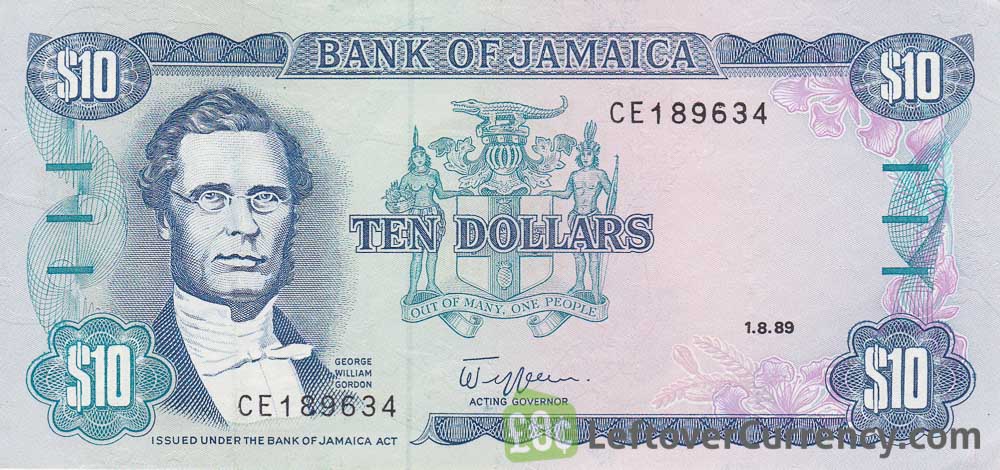
George William Gordon can also be found on Jamaica's 10 dollar note.
With that we have our last jump ahead of us. Let's jump back in our phone booth and head back to the Circle K!
The Morant Bay Rebellion will forever stand as a momumental piece of Jamaican history marking their struggle and fight for justice and equality. Courageous figures like Paul Bogle and George William Gordon exposed the deep-seated inequalities of colonial rule. Even though the rebels and supporters of the Morant Bay Rebellion were suppressed and brutally punished the legacy they have left in Jamaican history lights a path of resistance and gives us the best example of being the change you want to see in the world. The events of Morant Bay help remind us of the ongoing quest for freedom and social justice take determination, courage and perseverance.
My excellent friends! Thank you so much for joining me on this bodacious journey through history. I hope you enjoyed this most triumphant experience and learned some excellent facts about Caribbean history dudes!
I can't wait to see you on the next one, until then party on dudes! *air guitar*

This project is designed for the general public to increase their knowledge of British History, specifically the Morant Bay Rebellion in the Caribbean. This exhibit will give the general public a way to be better engaged in the events that took place in the Caribbean in the 1800s. This website shows the events that took place leading up to the Morant Bay Rebellion and the aftermath of the Rebellion.